Most technical founders chase software. But some of the cleanest unit economics in India right now sit inside an unglamorous object you have walked past a thousand times: the humble shipping pallet. Every carton of goods that moves through a warehouse, port, or factory floor rides on one. Demand scales directly with logistics, FMCG, pharma, and exports, all of which are growing fast.
What makes this interesting for someone with an analytical mindset is not the pallet itself. It is the stack of advantages sitting underneath it: a measurable import-substitution gap, a second revenue stream from recycling credits, agricultural waste available as cheap raw material, and a state subsidy regime in Chhattisgarh that can offset half your capital cost. This article rewrites an internal research brief into a founder-facing read, so you can judge whether the opportunity is worth a deeper feasibility study.
The Opportunity in One Picture
Three structural forces converge here:
- A growing market. India's pallet market is heading toward an additional USD 895 million by 2029, growing at roughly 9% CAGR.
- A clear import gap. Plastic pallets see around 8,368 shipments imported per year from 532 exporters globally, money that could be captured by domestic production.
- A waste-to-wealth angle. Recycled plastic and agricultural-waste pallets qualify as a thrust sector in Chhattisgarh, unlocking extra subsidy and a recycling-credit revenue stream on top of product sales.
The combination matters more than any single factor. You are not just making a product the market wants; you are making it from cheap inputs, in a location that pays you to set up, while earning compliance credits that brands are legally required to buy.
Market and Demand
The demand picture is healthy across every pallet category, and the recycled segment is the fastest mover.
- India pallet market: growing to an additional USD 895 million by 2029, at about 9% CAGR (2024 to 2029).
- Global plastic pallets: a USD 7 to 8.5 billion market in 2024, growing at 5.4 to 5.8% CAGR.
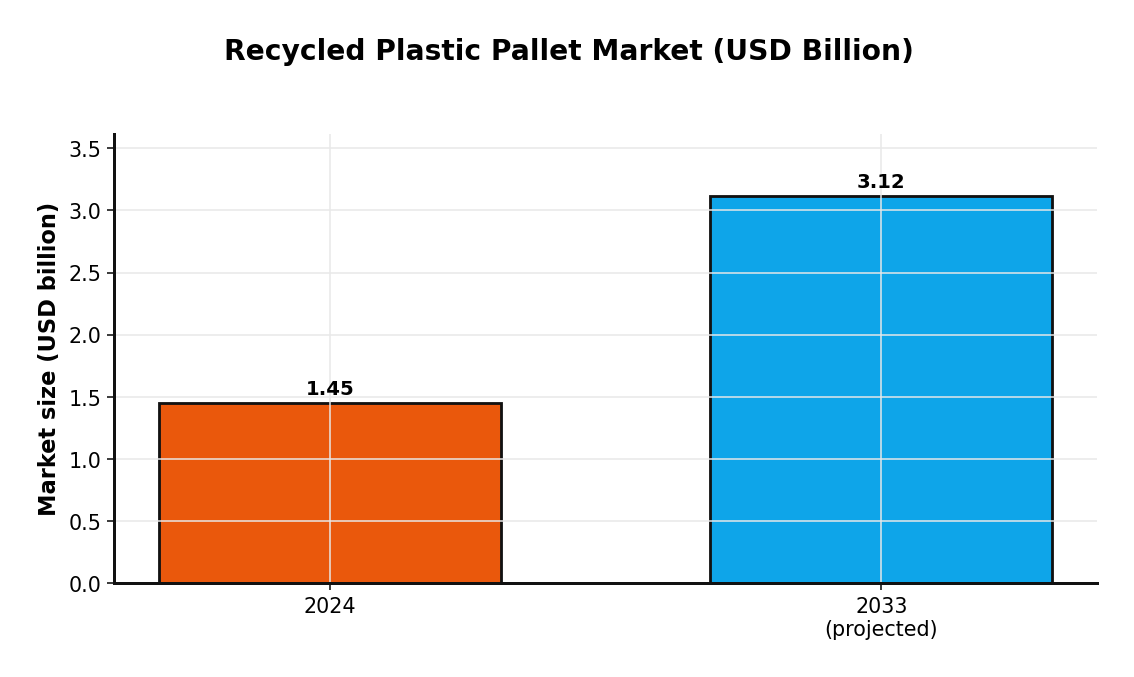
- Recycled plastic pallets: USD 1.45 billion in 2024, projected to reach USD 3.12 billion by 2033.
The import data is where the substitution story sharpens. Roughly 8,368 plastic-pallet shipments arrive per year, plus a smaller stream of around 111 HDPE pallet shipments over the trailing twelve months from 27 suppliers. Every one of those is a customer already buying the product from abroad, a warm market that a domestic manufacturer with the right quality and price can convert.
Buyers cluster in predictable places: third-party logistics and warehousing, FMCG distribution, pharma cold chain, and automotive supply lines, all of which need export-ready, hygienic, standards-compliant pallets.
The Product and Its Economics
Not all pallets are the same business. Material choice drives your cost base, your buyer, and your margin profile. The five practical options:
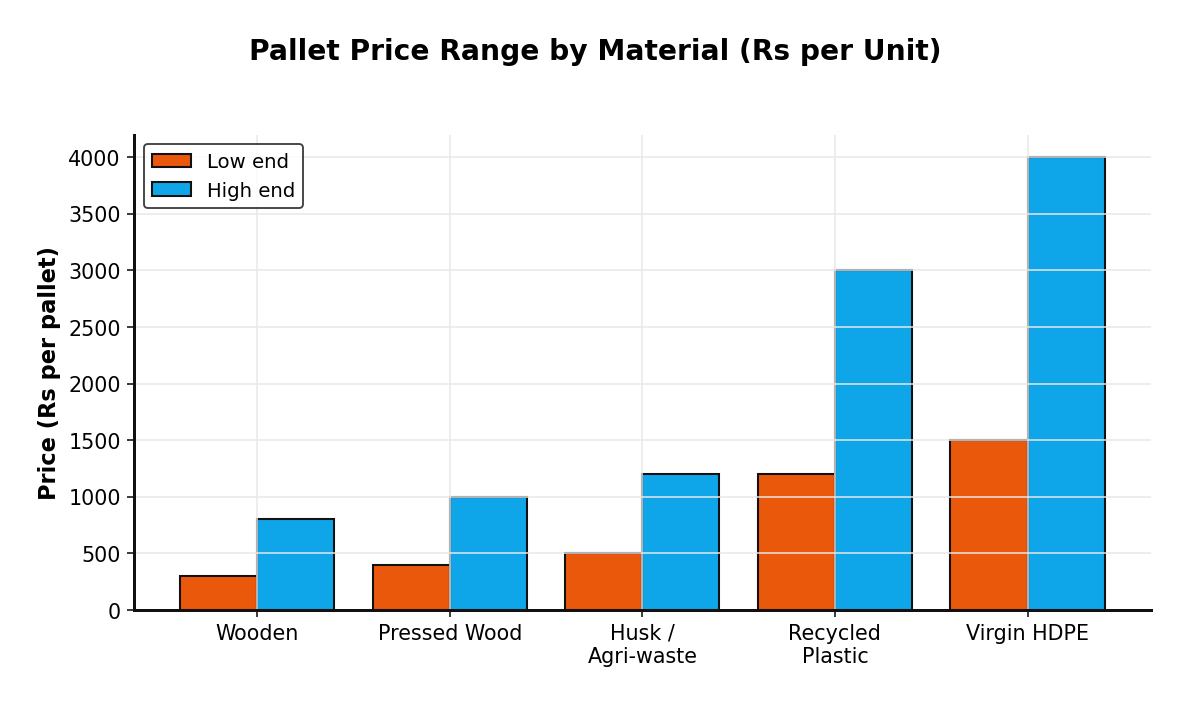
- Wooden (pine, hardwood): cheap and repairable, but heavy, prone to pest issues, and they need treatment for export. Roughly Rs 300 to 800.
- Plastic, virgin HDPE: durable, hygienic, and export-ready, but expensive and not eco-friendly. Roughly Rs 1,500 to 4,000.
- Plastic, recycled HDPE/LDPE: eco-friendly and EPR-credit eligible, with slightly lower strength. Roughly Rs 1,200 to 3,000.
- Pressed wood (chips plus resin): light and ISPM-15 exempt, but lower durability. Roughly Rs 400 to 1,000.
- Husk and agri-waste (rice husk, straw): very eco-friendly, light, and export-ready, though the technology is newer. Roughly Rs 500 to 1,200.
For a Chhattisgarh-based founder, two materials stand out. Recycled plastic plugs directly into the import-substitution gap and earns recycling credits. Rice husk and agri-waste leans on the state's biggest natural advantage, an agricultural economy with husk and forestry waste available locally and cheaply.
The second revenue stream: EPR credits
This is the part most founders miss. Extended Producer Responsibility (EPR) is mandatory in India. Brands that put plastic packaging into the market are legally obligated to ensure a matching quantity is recycled, and they prove it by buying EPR certificates from registered recyclers.
- Certificate value runs Rs 4.5 to 10 per kg, depending on plastic type.
- Registration is through the CPCB portal at https://eprplastic.cpcb.gov.in.
- Buyers are large FMCG and beverage brands that need the credits to stay compliant.
That creates a genuine double revenue model. You sell pallets to logistics and FMCG customers, and you sell EPR credits to the same kind of brands for handling recycled plastic. One operation, two income lines.
The Subsidies That Reshape Returns
This is where Chhattisgarh changes the math. Under Chhattisgarh's Industrial Development Policy 2024-30, a waste-based manufacturing unit can stack multiple incentives that together offset well over half the effective investment.
Fixed capital and interest subsidy
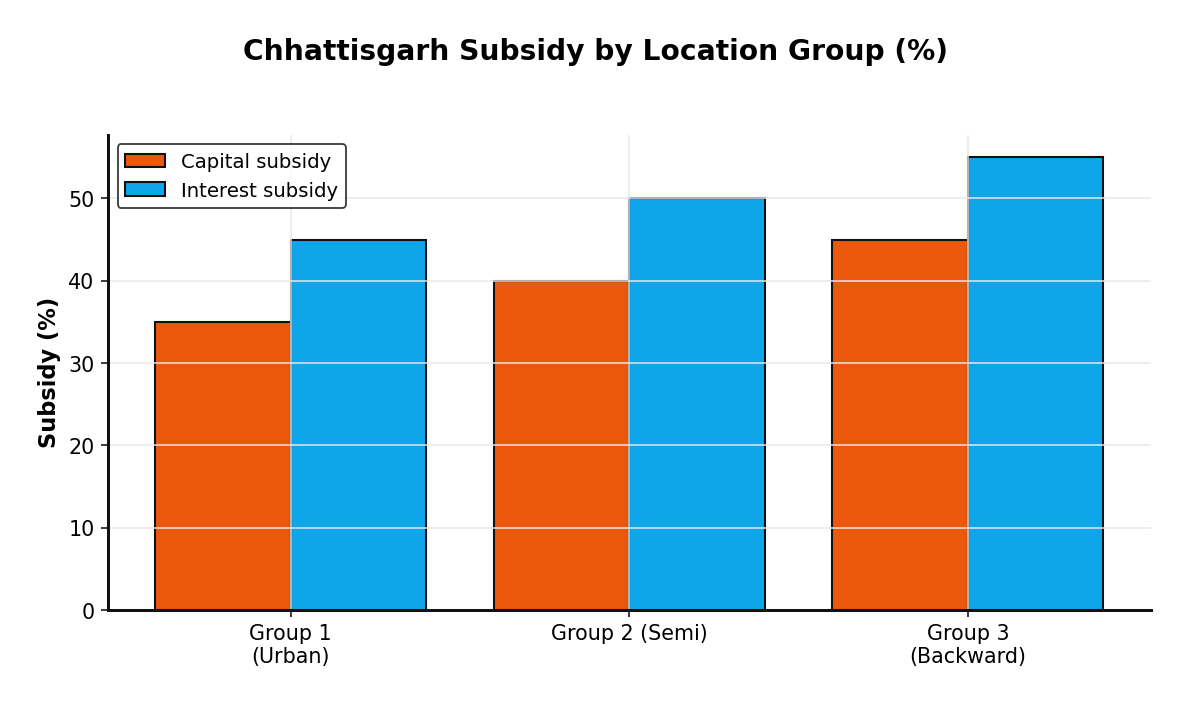
The headline benefits scale by where you locate. Group 3 (backward) areas pay the most, which is exactly where a new founder should look.
- Fixed Capital Investment subsidy: 35% in Group 1 (urban), 40% in Group 2 (semi), 45% in Group 3 (backward).
- Interest subsidy: 45% in Group 1, 50% in Group 2, 55% in Group 3, paid annually for six to eight years against your term loan.
The bonuses that stack on top
- Thrust sector bonus (waste-to-wealth): an additional 5% capital subsidy and 10% higher caps, with biomass briquettes and pellets specifically named.
- Special category bonus: SC/ST, women, ex-servicemen, and Divyang entrepreneurs each get an extra 10% subsidy and 10% higher cap. SC/ST young entrepreneurs can get 25% subsidy up to Rs 1 crore on a first venture.
- Other exemptions: 100% stamp duty exemption on land and building, 100% electricity duty exemption for five to twelve years, 100% mandi tax exemption for five years on agro-processing, and 50% subsidy on environment equipment up to Rs 25 lakh.
The startup package
If you secure DPIIT recognition, a further package opens up, staged over 18 months.
- Seed fund: Rs 5 lakh on incubator recommendation.
- Operations fund: Rs 3 lakh after six months.
- Continuous fund: Rs 3 lakh after one year.
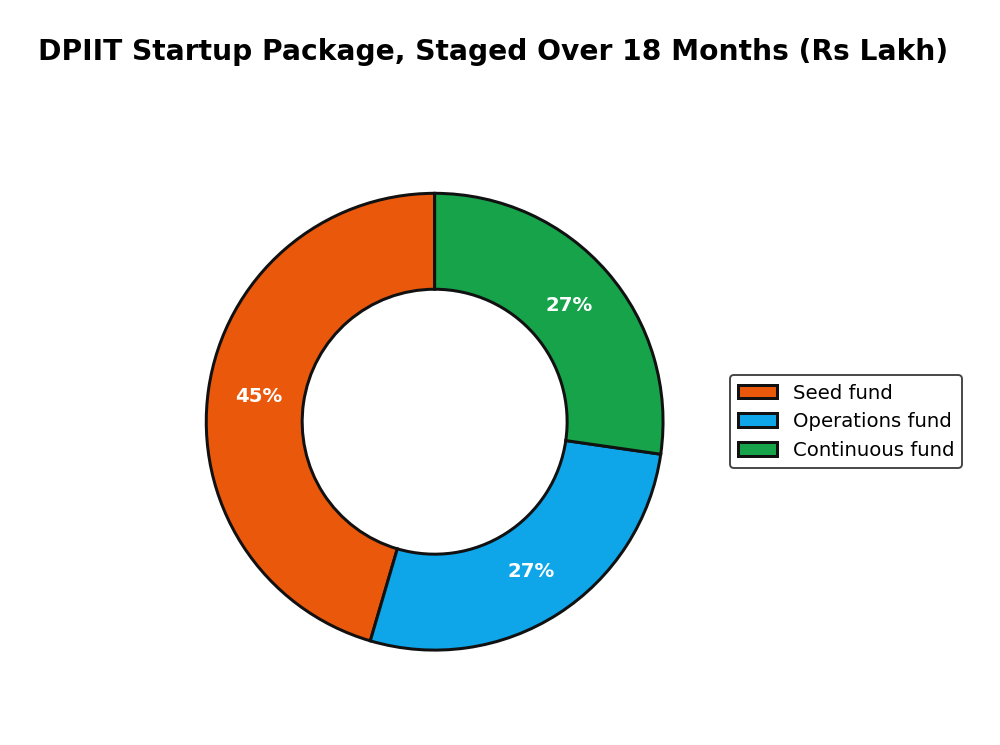
That is Rs 11 lakh in staged grants, on top of rent subsidy (40% up to Rs 15,000 a month for three years), technology purchase support (50% up to Rs 10 lakh), patent filing support, and 80% quality-certification support up to Rs 10 lakh. When capital, interest, electricity, and stamp duty incentives are combined, the effective subsidy crosses 50%.
The Risks to Respect
No venture is a free lunch, and the source signals where the homework is still pending.
- Technology maturity. Husk and agri-waste pallet technology is newer, and the press and binder process needs validation before you commit capital.
- Buyer concentration. Specific committed buyers for husk and agri-waste pallets still need to be lined up; demand at the category level is not the same as a signed offtake.
- Standards and certification. Export pallets require ISPM-15 compliance and BIS quality conformance, each with its own cost and lead time.
- Machinery economics. Injection-molding (plastic) versus press machinery (husk) have very different capital and capacity profiles, and the production-capacity-versus-investment trade-off needs concrete quotes before a DPR.
None of these are dealbreakers. They are simply the validation gates that separate a promising brief from a fundable plan.
How to Start
The research lays out a sequence that keeps capital at risk low until the opportunity is proven.
- Validate demand first. Identify and talk to concrete buyers in logistics, FMCG, pharma, and auto, and get real machinery quotes for both plastic and husk lines.
- Register the foundations. Set up on the Chhattisgarh single-window portal at https://oneclick.cgstate.gov.in, complete Udyam registration, apply for DPIIT recognition, and register on the CPCB EPR portal.
- Engineer the location. Choose a Group 3 area to maximise subsidy, prepare a Detailed Project Report, then apply for the capital subsidy and secure a term loan to unlock the interest subsidy.
- Use the support channels. The state startup helpline (1800 233 3943) and the 36INC incubator route exist specifically to move first-time founders through this.
Where DatCrazy Fits
The difference between a research brief and a running business is data discipline. Before you commit capital, the questions that decide success are quantitative: which buyers actually convert, what your true cost per pallet is once husk supply fluctuates, how EPR credit revenue tracks against production, and when subsidy disbursements actually land against your loan schedule.
That is the work we do at DatCrazy. We build the feasibility models, buyer-pipeline dashboards, and production and EPR-tracking software that turn a promising sector into a managed operation, so you make the call on evidence rather than optimism. If you are weighing a manufacturing or waste-to-wealth venture, let us help you pressure-test the numbers before the machinery arrives.